
The Space Startup Boom Is Running Out of Rockets
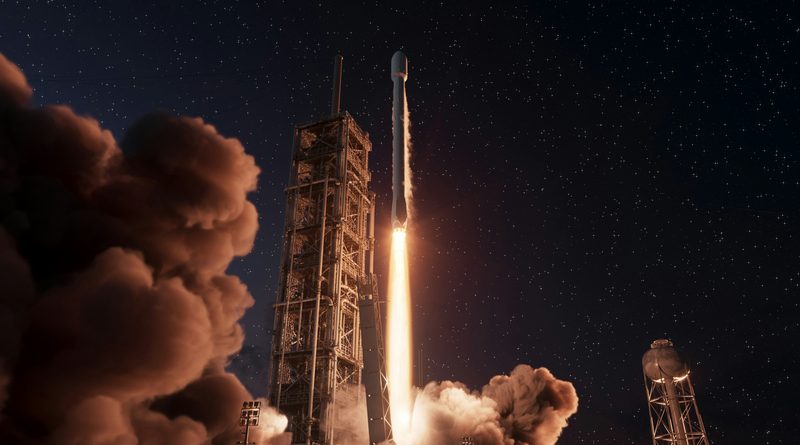
A 22-meter rocket built by a Hyderabad startup lifted off India’s Sriharikota launch site on July 18, and placed its payloads into a 450-kilometer orbit. Skyroot Aerospace’s Vikram-1 made India the third country, after the United States and China, where a private company has built a rocket and flown it to orbit, marking the moment with a short post on social media announcing that it had “arrived.”
It was one of several moments this year that would have sounded far-fetched not long ago: Germany’s Isar Aerospace flew what the European Commission called the first commercial launch from European soil, from Andøya in Norway; Chinese regulators cleared LandSpace to pursue a Shanghai stock listing worth about $1 billion, with several other private rocket makers lining up behind it; and the run-up to SpaceX’s public listing pulled a wave of generalist investors into a sector many had previously ignored.
Smaller deals tell the same story. Last week, Colorado launch startup LEAP signed a non-binding agreement with Highlands and Islands Enterprise to develop launches from Sutherland Spaceport in northern Scotland, a site that had stood idle since its previous operator collapsed earlier in the year.
Here, LEAP flew its first rocket only in May, yet it is already looking for launch sites on another continent, because European customers need more ways to reach orbit than currently exist.
Unsurprisingly, the money followed all of this activity. Private space companies raised $20.8 billion USD in the third quarter of 2026 alone, close to three times what they raised in the previous quarter and the most in any quarter on record, according to Seraphim’s SpaceTech Investment Tracker.
And, over the twelve months to September, investors put $40.1 billion into the sector, up from $9.7 billion a year earlier.
The long-term forecasting can help explain the enthusiasm. The World Economic Forum and McKinsey expect the global space economy to grow from $630 billion in 2023 to $1.8 trillion by 2035, roughly twice as fast as global GDP, as satellite data and connectivity spread into industries from agriculture to insurance.
Governments are spending more, too. The European Space Agency’s (ESA) 2026 Space Economy Report found that European space budgets grew 12% to €13.5 billion ($15.1 billion) in 2025, largely because of defense, even as global public space spending dipped.
Looking past the totals, though, and the boom is narrower than it seems. A few large companies are taking most of the capital, governments are deciding where much of the growth happens, and the whole sector keeps running into the same physical limit: there are more satellites waiting to fly than there are rockets and launch sites to carry them.
For founders, this is the point that matters the most.
The Money Is Real, But It’s Concentrating
Seraphim’s record quarter comes with a large asterisk: a single $10 billion transaction for Blue Origin accounts for nearly half of it. Take that deal out and the remaining $10.8 billion is still well above the previous quarter, so the growth is genuine, but the headline figure says more about one company’s fundraising than about the health of the average space startup.
The more revealing numbers sit further down Seraphim’s table. The number of deals rose from 140 to 216 in a single quarter, which looks like good news for founders. Yet the median deal size fell from $14.9 million to $9.8 million, while the average deal jumped to $137 million.
When the average climbs and the median falls at the same time, the money is pooling at the top: more companies are getting funded, but most of them are getting smaller cheques, and a few are getting enormous ones.
For example, BryceTech’s annual Start-Up Space report counted $10.9 billion in start-up space investment in 2025, with U.S. companies taking about two-thirds of it. Meanwhile, Space Capital recorded $36 billion across 148 companies in the first quarter of this year alone, much of it flowing to established players ahead of SpaceX’s listing and to firms tied to rising defense budgets.
Geography adds another layer. ESA’s report found that private investment in European space companies actually fell 8% in 2025, to €1.4 billion, at a time when U.S. funding was surging; a European founder and an American founder working on similar technology are not raising in the same market, even if the global headlines suggest otherwise.
What investors are rewarding is fairly consistent, though. Companies with hardware that has already flown, signed government or defense contracts, and a believable plan to manufacture at scale are attracting the largest rounds.
Those that sell data and software built on top of satellites are also doing well, especially where they touch defense intelligence or AI. Earlier-stage hardware companies with promising designs but no flight history are finding the process slower and the terms tougher.
This, of course, doesn’t mean that the window is closing for young companies. BryceTech counted 397 first-time investors in the sector last year, signalling that new capital is still coming in. But the point holds that a startup with a prototype and a slide deck is now competing for attention with companies that have orbital flights, revenue and government backing.
Founders who can show progress on any of those fronts, even a small contract or a successful test, are likely to find investors far more receptive than those who can only point to the size of the market.
Governments Are Setting the Pace
Unlike most tech booms, the space startup surge follows national borders closely. India had one space startup in 2014 and now has more than 400, according to government figures, after New Delhi opened launch and satellite work to private firms in 2020. Skyroot’s orbital flight came six years after that reform
And in China, LandSpace’s listing is meant to fund production of its reusable Zhuque-3 rocket, driven largely by launch demand from the country’s planned satellite megaconstellations.
Europe is paying its own startups to catch up. In August, ESA signed €543.6 million in contracts with Isar Aerospace, Rocket Factory Augsburg and Spain’s PLD Space under its European Launcher Challenge, with funding released as each company hits its milestones.
Public programs here create real customers and lower the risk for private investors, while also tying a company’s prospects to national priorities, which can shift with an election or a budget review.
The Bottleneck Is On the Ground
Satellites have become dramatically cheaper and faster to build over the past decade. Getting them into orbit has not improved at the same rate, and that gap now shapes the entire industry.
The scale of the problem became clearer in September, when EU Space Commissioner Andrius Kubilius laid out the numbers at a conference in Brussels. Around 50,000 satellites are expected to launch worldwide over the next decade, and Europe’s demand for launches is set to grow nearly sixfold by 2035, with national defence satellites rising from about 20 launched between 2016 and 2024 to nearly 300.
The EU expects to need 14 Ariane launches in 2031 alone, against a planned ten a year, and eight Vega launches in 2030, against six. Europe still has only one operational spaceport, in French Guiana.
Operators are feeling the squeeze already. Valentin Benoit, CEO of French rideshare company RIDE!, said earlier this year that companies like his have to fight for launch capacity, and that he doesn’t expect prices to come down any time soon.
For a satellite startup, that can mean waiting months for a slot, paying more than planned, or both, while competitors with better launch arrangements get to orbit first.
The newer launch companies are designing their businesses around this shortage, and they are making different bets on how to solve it. LandSpace and PLD Space are investing heavily in reusable boosters, on the logic that a rocket that flies many times drives down cost per launch, with PLD particularly now targeting its first orbital flight before mid-2027, saying it has already built three vehicles in parallel.
LEAP’s Scottish agreement reflects the opposite bet, built on volume and mobility rather than reuse. The company builds small rockets on modular production lines designed to turn out more than 30 vehicles a year, and pairs them with launch equipment that fits in shipping containers.
Its first rocket flew in the Mojave Desert less than 30 hours after that equipment arrived at the range, according to Payload. That model only works if the company can move between launch sites quickly, which is why a spaceport in the Scottish Highlands matters to a firm based in Colorado .
Sutherland itself shows how unforgiving the infrastructure side can be. The site’s previous operator, Scottish rocket maker Orbex, tried to develop both its rocket and its own spaceport before it abandoned construction there in 2024 and moved its plans to Shetland. In February, it entered administration after drawing more than £70 million ($93.9 million) in public funding. The Highland site sat empty until the development agency bought it back in August and started looking for a new tenant.
Shetland’s SaxaVord, meanwhile, holds the UK’s only full vertical launch licence and is still waiting for its first rocket to fly.
The pattern is the same almost everywhere: a satellite company can iterate in a clean room, a launch company needs pads, airspace clearances, regulatory approvals, and local communities willing to host it—and each of those can take years.
Kubilius has argued that Europe’s emerging spaceports should share services the way airports do, rather than each operating alone, which would favor operators that can work across several sites, and it would make launch less of a single point of failure for the companies that depend on it.
Now, launch access is a business question as much as a technical one for those founders building anywhere in the space economy. A satellite company with a guaranteed ride has an advantage over a better-funded rival still waiting in the queue, and as investors get more selective, that is starting to show up in who gets funded—and on what terms.
Featured image: Planet Volumes via Unsplash+