
When Electricity Becomes the Bottleneck: A Guide to AI Data Center Power Planning
Artificial intelligence depends on more than advanced chips, software, and skilled engineers. It also depends on electricity that can be delivered reliably, at a specific location, and on a schedule that matches construction plans. In a recent discussion, KR SRidhar highlighted a concern now shared across the industry: computing projects cannot assume that a grid connection will be available quickly enough to support AI growth. That changes how data centers are planned. A site can have access to land, fiber, water, and capital. Yet it is still delayed because a substation is at capacity, a transmission line needs reinforcement, or essential equipment has a long delivery time. For developers, utilities, regulators, and nearby communities, data center power planning has become a central part of digital infrastructure planning.
Why Power Is Now a Core AI Issue
Electricity planning is not simply about buying enough energy over a year. A data center needs sufficient power capacity at every moment, especially during hot weather, equipment failures, or regional demand peaks. Large AI campuses can seek connections measured in hundreds of megawatts, placing them in the same planning category as major industrial facilities; the difference between energy and power matters. Energy is the total electricity used over time.
Power is the instantaneous ability of the system to serve demand. A region may have enough annual generation on paper, yet lack the transmission capacity, substation capacity, or firm supply needed to serve a new computing cluster at its requested location. Recent data center electricity trends also show why local bottlenecks deserve more attention than national averages alone.
How AI Changes Electricity Demand
Traditional cloud facilities host a wide range of workloads, including websites, storage, business software, and video services. AI training and inference add dense clusters of specialized processors that can draw substantial power and create intense heat. The server racks are only part of the load. Cooling systems, pumps, fans, networking hardware, storage, lighting, security, and backup systems all increase total facility demand. AI demand can also change quickly.
New hardware may be installed in large batches, turning an available building shell into a major electrical load within months. A facility may not run at its maximum level every hour, but utilities must prepare for the highest credible demand. That is why a project with a lower average load can still require a very large connection and data center power planning is critical to build-out success.

Where the Grid Feels the Pressure
The grid experiences strain first at the local level. A high-voltage line may pass near a property but have no usable capacity. A nearby substation may lack spare bays, transformers, or switchgear. Adding those assets often requires engineering studies, land rights, permits, equipment orders, construction crews, and coordinated outages.
Multiple facilities in the same region can compound the problem. They may depend on the same generation fleet, transmission corridor, or substation network. Extreme heat, winter storms, drought, wildfire risk, and ordinary seasonal peaks can further reduce operating margins. Grid congestion can therefore affect prospective data centers and existing residential, commercial, and industrial customers alike.
How Electricity Reaches a Data Center
- Generation produces electricity from a mix of resources.
- High-voltage transmission moves bulk power across long distances.
- Substations step down the voltage and direct power to local networks.
- Dedicated equipment delivers electricity to the data center campus.
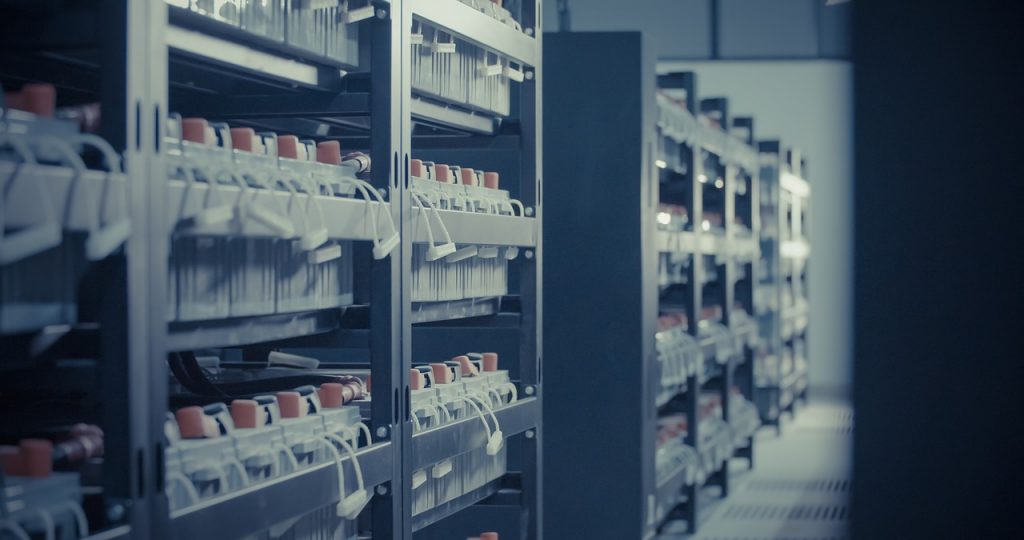
- On-site systems provide backup or supplemental power when needed.
Power Options for Data Centers
No single supply strategy fits every project. Grid-connected power can provide dependable service where generation and transmission are available, but interconnection timelines may be long. On-site generation can offer another path, though it brings fuel, emissions, noise, maintenance, permitting, and reliability considerations. Renewable energy can reduce emissions and support long-term procurement goals, but wind and solar output vary by weather and time of day.
Battery storage can help manage brief peaks, provide backup support, and respond quickly to grid conditions, but it does not, by itself, replace long-duration supply. Some operators may also use flexible computing, shifting non-urgent workloads between sites or reducing consumption during periods of high demand.
Regulators, Utilities, and Cost Allocation
Utilities and regulators are revisiting how very large customers connect to the system. The central questions are straightforward: How quickly can a project be studied? What upgrades are required? Who pays if a project changes course? What operating limits apply during emergencies? On June 18, 2026, the Federal Energy Regulatory Commission directed six regional grid operators to review or justify rules affecting large-load integration, including study processes, cost transparency, flexible service, and arrangements involving nearby generation. These reforms reflect the need to increase speed without shifting unreasonable costs or reliability risks to other customers.
How Power Planning Affects Communities
Data center proposals can bring construction work, tax revenue, and related investment. They can also raise reasonable questions about land use, water consumption, backup-generator emissions, noise, and electricity rates. Local officials should ask for clear descriptions of the project’s expected load, cooling approach, construction phases, grid upgrades, and emergency operating plans.
A proposed campus may be welcomed for its economic potential, yet still face scrutiny over whether the project, the utility system, or both will pay for a new transmission line or substation. Clear cost allocation and transparent timelines help communities evaluate benefits and burdens before major commitments are made.
Questions Communities Can Ask
- Who will pay for transmission and substation upgrades?
- What happens if the region faces a power shortage?
- How much water will the cooling system use?
- Will the facility reduce demand during grid emergencies?
- What long-term local benefits will remain after construction?
A Practical Planning Checklist
- Measure the full load. Include IT equipment, cooling, networking, storage, and backup systems.
- Map the connection. Identify transmission lines, substations, generation resources, and equipment constraints.
- Plan around timing. Account for studies, permits, transformer orders, construction, and energization.
- Test peak conditions. Model heat waves, storms, outages, and rapid workload growth.
- Compare supply paths. Evaluate grid service, storage, renewables, on-site generation, and flexible computing.
- Assign costs clearly. Separate project-specific upgrades from broader system improvements.
- expansion plan. Design early phases so future growth does not require avoidable rework.
Common Questions About AI and Electricity
Will AI Cause Power Shortages?
AI can create serious local pressure, but outcomes vary by region. Generation capacity, transmission availability, weather exposure, demand growth from other industries, and project timing all influence reliability.
Can Data Centers Operate Without the Grid?
Some facilities can use on-site generation and storage, but complete independence is difficult to achieve. Fuel logistics, maintenance, emissions controls, redundancy, and long-duration backup must all be considered.
Will Households Pay More for AI Growth?
That depends on rate design and cost allocation. The key policy goal is to ensure that large projects cover the upgrades needed to serve them while recognizing infrastructure that provides wider public benefits.
The Road Ahead
AI growth may create major economic opportunities, but it also makes power, cooling, water, land, and community planning inseparable. The strongest projects will treat electricity as a foundational design requirement rather than a late-stage utility request. Careful planning cannot eliminate every delay, but it can improve reliability, reduce avoidable costs, and make the distribution of benefits and responsibilities easier to understand.
Conclusion
AI growth and dependable electricity do not have to be competing goals. The strongest data center projects will treat data center power planning as a core part of development from the beginning. By combining reliable grid connections with storage, efficient computing, appropriate generation, flexible demand, and clear cost-sharing arrangements, developers can reduce delays and manage pressure on local infrastructure. Utilities and regulators also have an important role in improving interconnection processes while protecting existing customers and maintaining system reliability.
Communities should have clear information about expected benefits, costs, resource use, and infrastructure requirements. Ultimately, responsible AI expansion requires more than building additional computing capacity. It requires energy systems that can support technological growth while remaining reliable, affordable, resilient, and responsive to local needs.
